


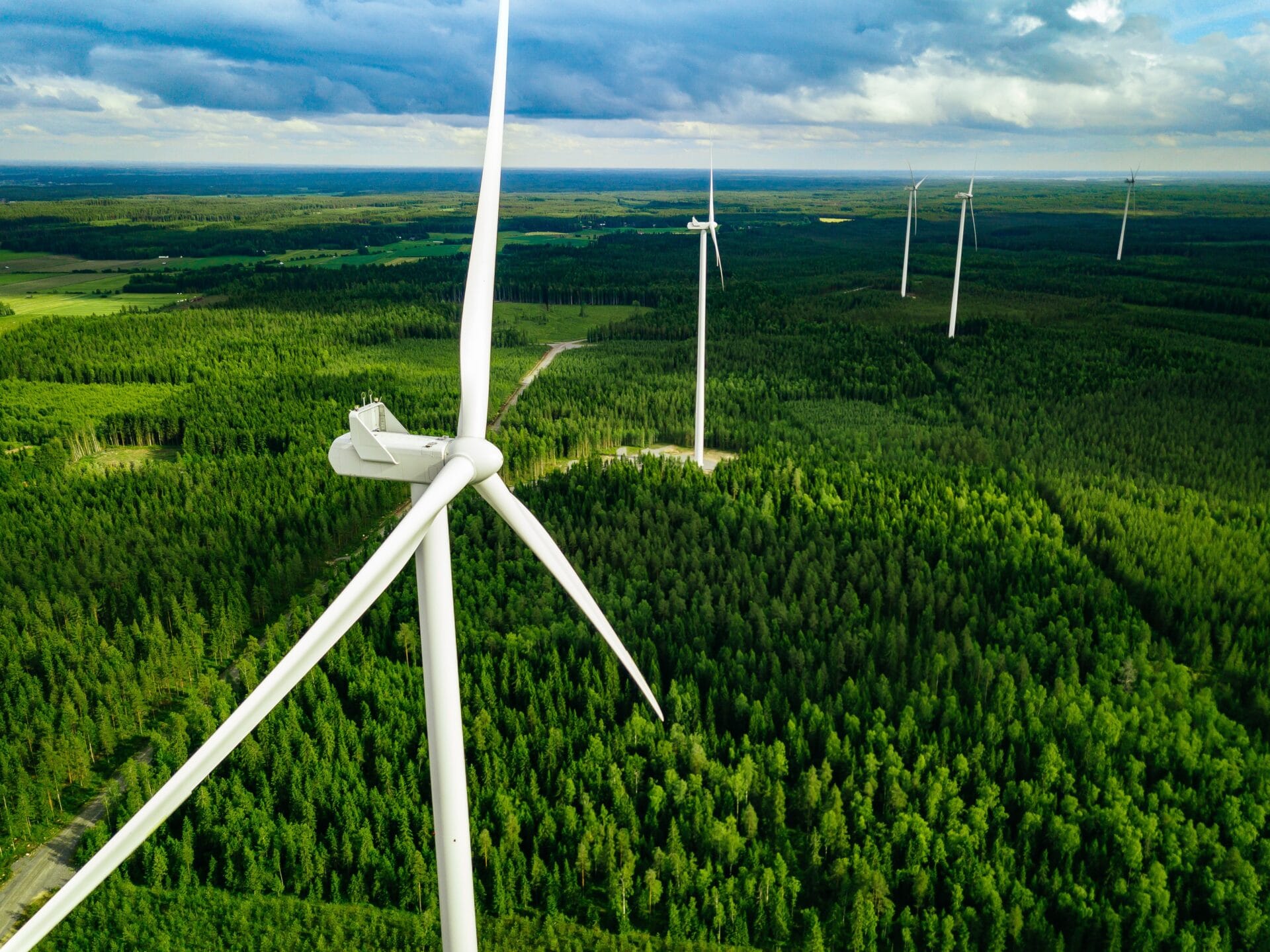
Reducing Finland’s greenhouse gas emissions and strengthening its carbon sinks require measures from society that simultaneously reform the economy and benefit the national economy.
The policy recommendations published on 27th October by the Finnish Climate Change Panel are the means that Finland needs to meet the obligations set by the Paris Agreement and the EU, as well as national climate targets.
Finland benefits from effective climate policy
Climate change mitigation requires rapid global emission reductions, strengthening natural carbon sinks and technological removal of carbon dioxide from the atmosphere. Finland has succeeded in reducing fossil emissions. At the same time, the carbon sink of forests has declined.
National climate targets are scientifically justified. Based on surveys, the majority of Finns support climate action. However, the targets will not be achieved by the means already agreed, but further measures will be needed.
“When Finland sticks to its goals, we will support the EU’s leadership in global climate work and, at the same time, redeem the opportunities offered by the green transition,” says Jyri Seppälä, research professor and chair of the Finnish Climate Change Panel.
Climate plans are important for achieving Finland’s binding climate targets. The plans should be approved at the beginning of each government term, allowing sufficient time for implementation and potential additional measures. The plans should be based on an adequate and up-to-date knowledge base and the cost-effectiveness of the measures.
The knowledge base would be improved by a permanent assessment system and tools that consider the overall economic impacts. The plans should pay more attention to the Sustainable Development Goal of the Climate Change Act and assess costs from the perspective of intergenerational justice.
Economic instruments and multi-benefit measures
The new policy recommendations of the Finnish Climate Change Panel are a continuation of the recommendations published last year. They include the same means, which can be quickly introduced but are yet to be implemented, as well as new and more specific proposals.
The most cost-effective way to reduce transport emissions is to accelerate electrification. To this end, the Finnish Climate Change Panel recommends, among other things, a systematic reform of transport pricing and subsidies to promote electrification.
“It is justified to compensate for the decline in tax revenues resulting from electrification through a distance- and emissions-based tax, as electrification only eliminates a small part of the social costs caused by road transport,” says Professor Heikki Liimatainen, member of the Finnish Climate Change Panel.
More energy-efficient buildings reduce emissions, promote energy security and reduce dependence on imported fossil fuels. The Climate Change Panel recommends increasing energy efficiency through advisory services and investment subsidies.
“Tailored advisory services help households and housing companies improve their energy efficiency. The costs of energy advisory services and investment subsidies are partly returned as tax revenue,” says Professor Jarek Kurnitski, member of the Finnish Climate Change Panel.
Emissions from agriculture have not decreased, even though the cost-effective emission reduction potential is known. The Climate Change Panel recommends increasing the share of plant proteins in the food system, by reforming agricultural policy and economic instruments, and by developing food products, public procurement and food services.
“Responding to the transition through domestic production strengthens the national self-sufficiency in food production and reduces fertilised arable area, enabling the reduction of agricultural emissions,” says Research Professor Heikki Lehtonen, member of the Finnish Climate Change Panel.
At present, forests are harvested so intensively that the increase in the forest carbon stock has stopped. The Finnish Climate Change Panel recommends reforming the Forest Act and the Water Act to oblige forest management to adopt climate-smart methods.
“Longer forest rotation periods, reducing thinnings, avoiding clear-felling in nutrient-rich drained peatland forests and maintaining wetter conditions in peatland forests are climate-smart actions that are profitable for forest owners,” says Research Professor Raisa Mäkipää, vice-chair of the Finnish Climate Change Panel.
The Climate Change Panel emphasises that the steering effect and predictability of emissions pricing must not be undermined. Renewable energy and low-carbon industry create new business, innovations and jobs.
“The availability of low-emission electricity for industrial low-carbon solutions must be secured. In addition to the sufficiency of electricity, we need to improve energy efficiency, security of supply and the crisis resilience of the system,” says Senior Scientist Kati Koponen, a member of the Finnish Climate Change Panel.
The Finnish Climate Change Panel provides 16 recommendations for the next Government
For climate policy to be effective, the Climate Change Panel proposes the following measures:
Transport
- Transport pricing and subsidies must be systematically reformed to promote electrification.
- The distribution obligation must be increased to achieve fossil-free transport.
- The transition from passenger cars to public transport, walking and cycling must be accelerated.
Site machinery
- Emissions from site machinery must be reduced through economic steering.
Buildings
- The energy efficiency of buildings must be improved through advisory services and investment subsidies.
- Replacing oil heating with lower-carbon alternatives must be supported with targeted measures.
Agriculture
- Emissions from cultivated peatlands can be reduced without compromising food production.
- Performance-based bonuses to steer emission reductions in agriculture.
- On arable land, nitrogen use efficiency can be enhanced and soil health improved by increasing the soil carbon stock.
- Targeting an equal share of animal and plant-based protein in food consumption.
Forestry
- Mandating carbon balance-strengthening forest management in the Forest Act.
- Making forest drainage subject to permits under the Water Act and removing barriers to re-wetting measures.
- Economic steering to enhance carbon sinks and reduce emissions.
Industry and energy production
- The steering effect and predictability of emissions pricing must not be undermined.
- The sufficiency of clean electricity must be secured for key low-carbon investments.
- A strategy for carbon capture, utilisation and storage (CCUS) must be developed and the risks of investing in them reduced.
Additional information:
Impact on emission reductions and carbon sink enhancement – Policy recommendations of the Finnish Climate Change Panel 2026 (in Finnish and in Swedish)
Photo: iStock